
Your elbow may feel fine carrying groceries but hurt the moment you throw a ball. Or you may have felt a sudden pop and wondered how long you would have to put your activities on hold. With a UCL tear, recovery depends on both the injury and what you need your elbow to do.
Some UCL injuries improve with rest and rehabilitation, while others require surgery to restore stability. Understanding the difference can help you set realistic expectations and take the next step toward recovery.
Quick Answer: How Long Does a UCL Tear Take to Heal?
UCL tear recovery may take several weeks to several months without surgery. After UCL reconstruction, returning to competitive throwing commonly takes 12 to 18 months. Recovery after a repair may be shorter, but repair is suitable only for certain injuries.
Your timeline depends on the tear’s severity, your treatment, and your activity goals. Comfortable daily use generally returns sooner than the ability to tolerate repeated, forceful throwing.
What Is the UCL, and How Does It Tear?
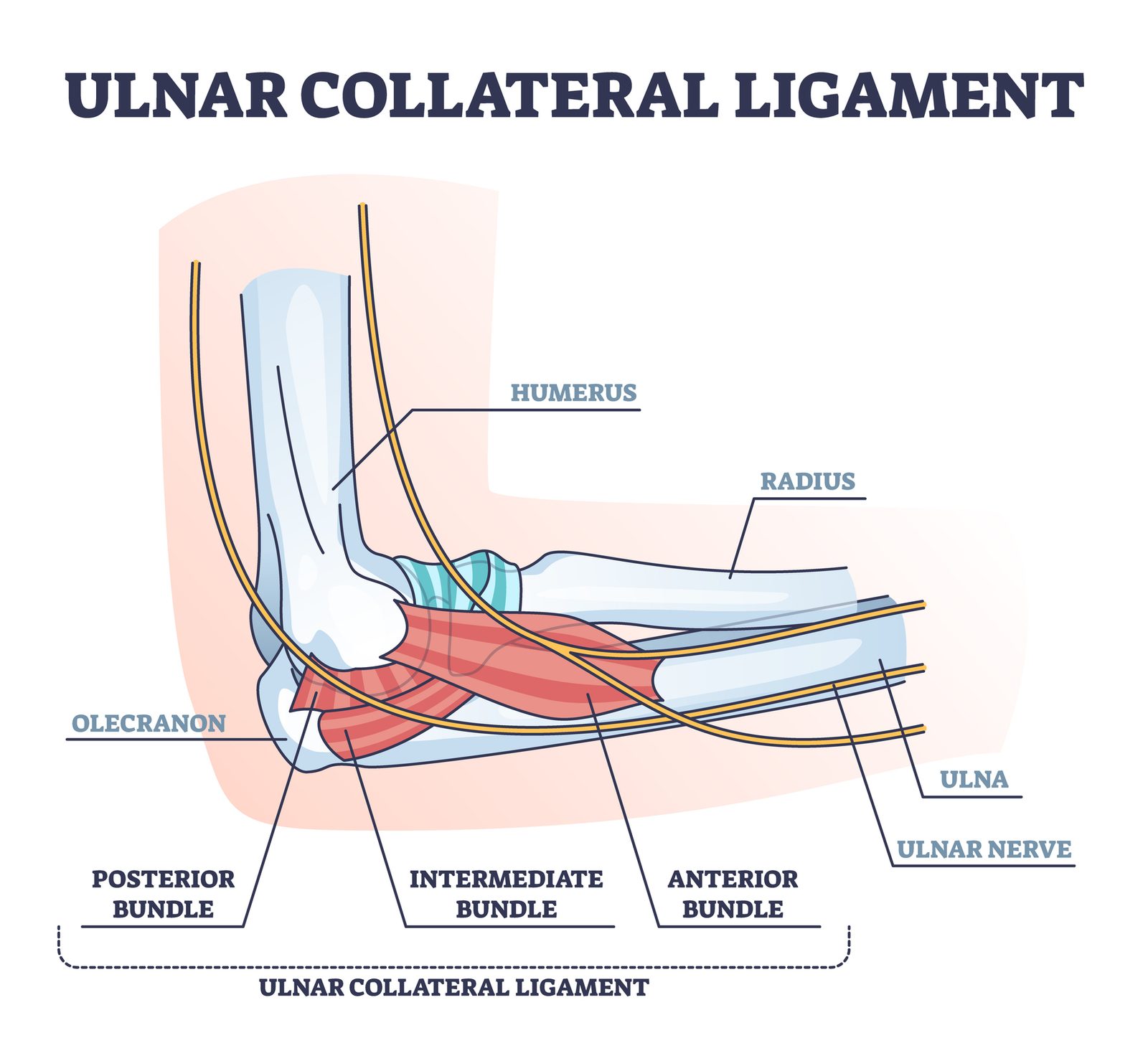
The ulnar collateral ligament, or UCL, is a strong band of tissue on the inside of your elbow. It connects the upper arm bone, called the humerus, to the ulna in your forearm. It helps resist forces that would pull the inner elbow joint apart during overhead throwing.
UCL injuries can happen in two main ways:
- Repeated stress: Overhead movements gradually strain and damage the ligament.
- A sudden injury: A fall onto an outstretched arm or an elbow dislocation can damage the UCL.
Baseball pitchers are especially familiar with this injury, but it can also affect other athletes and people whose activities place significant stress on the elbow.
The damage can range from a stretched ligament to a partial or complete tear. Your treatment plan depends on how much damage is present and how well the elbow functions.
What Does a UCL Tear Feel Like?
A UCL injury does not always begin with a dramatic pop. Some people notice a gradual ache or a decline in throwing performance before realizing something is wrong.
Common symptoms include:
- Pain or tenderness on the inside of the elbow.
- Discomfort during or after throwing or strenuous overhead activity.
- A feeling of weakness or looseness in the elbow.
- Reduced throwing speed or accuracy.
- A sudden pop followed by pain.
- Tingling or numbness in the ring and little fingers.
These symptoms can overlap with other conditions. For example, finger tingling may also be associated with ulnar nerve irritation or entrapment. An evaluation helps identify which structures are involved and guide appropriate treatment.
UCL Tear Recovery Without Surgery
Some partial tears and less severe injuries can improve without surgery. Treatment focuses on reducing stress on the ligament and rebuilding the support around the elbow.
Your plan may include:
- Activity changes: Taking a break from throwing and other movements that aggravate the injury.
- Protection: Wearing a brace if your doctor recommends one.
- Rehabilitation: Using physical therapy to restore movement and strengthen supporting muscles.
- A gradual return: Increasing activity as your symptoms and elbow function improve.
Nonsurgical recovery may take several weeks to several months. Your progress depends on the injury and the demands you hope to return to.
For throwing athletes, a doctor may recommend about 6 to 12 weeks without throwing before reassessing the elbow. Rehabilitation and a supervised throwing program may follow. That initial rest period is only one stage of recovery; it does not mean the elbow will be ready for competition at the end of it.
When Is Surgery Needed?
Surgery may be considered when pain or instability persists despite nonsurgical care, particularly when it prevents a return to demanding overhead activities. Your sport, job, examination findings, and imaging results all help guide the decision.
The two main approaches are:
- UCL repair: Reattaches the existing ligament to the bone, sometimes with reinforcement.
- UCL reconstruction: Rebuilds the ligament using a tendon graft. This is commonly called Tommy John surgery.
Repair may allow a shorter rehabilitation period, but it is appropriate only for selected injuries. The tear pattern and quality of the remaining tissue help determine whether repair is an option.
What Does Recovery After Tommy John Surgery Involve?
Recovery happens in stages. Each stage prepares the elbow for the next level of activity:
- Protecting the ligament: A splint or brace supports the elbow while the reconstructed ligament begins healing.
- Restoring movement: Guided exercises gradually improve elbow motion.
- Rebuilding strength: Rehabilitation strengthens the arm and other muscles involved in activity.
- Returning to activity: A supervised program gradually reintroduces the demands of your sport.
Your surgeon and physical therapist determine when it is appropriate to progress. Putting too much stress on the graft before it has healed can damage the reconstruction.
For competitive throwing athletes, full recovery commonly takes 12 to 18 months. Being able to move the elbow comfortably is an earlier milestone than being ready to pitch at full intensity.
Why Can Recovery Look Different for Two People?
A recovery timeline is a guide. Someone returning to everyday activities may have different treatment needs from someone hoping to return to competitive pitching.
Factors that influence recovery include:
- The tear’s severity and location.
- The stability of the elbow.
- Whether treatment involves rehabilitation, repair, or reconstruction.
- The demands of your sport or job.
- Your progress during rehabilitation.
Follow your prescribed program and report symptoms that return as activity increases. Your care team can help determine whether the elbow is ready for the next step.
Frequently Asked Questions About UCL Tear Recovery
Can a partial UCL tear heal without surgery? Yes, some partial tears improve with rest and rehabilitation. Treatment depends on elbow stability and your activity goals.
Does every complete UCL tear need surgery? No. Surgery depends on your symptoms, elbow function, and the activities you want to resume.
Can I exercise with a UCL tear? Some activities may be appropriate. Ask your doctor which exercises are safe during your recovery.
Can I start throwing once my elbow stops hurting? Pain relief does not mean your elbow is ready. Get clearance before gradually returning to throwing.
UCL Injury Care With Peter Howard, M.D.
If inner elbow pain or weakness keeps returning, an evaluation can help you understand the cause and your options for recovery. The right elbow treatment starts with understanding your injury and the activities that matter to you.
At Peter Howard, M.D., we care for patients in Clearwater – McMullen Booth and New Port Richey, serving communities throughout Pinellas and Pasco counties. Dr. Howard evaluates UCL injuries and develops individualized treatment plans that may include rehabilitation or surgery when appropriate.
Schedule an appointment with Peter Howard, M.D., today to discuss your elbow symptoms and next steps.