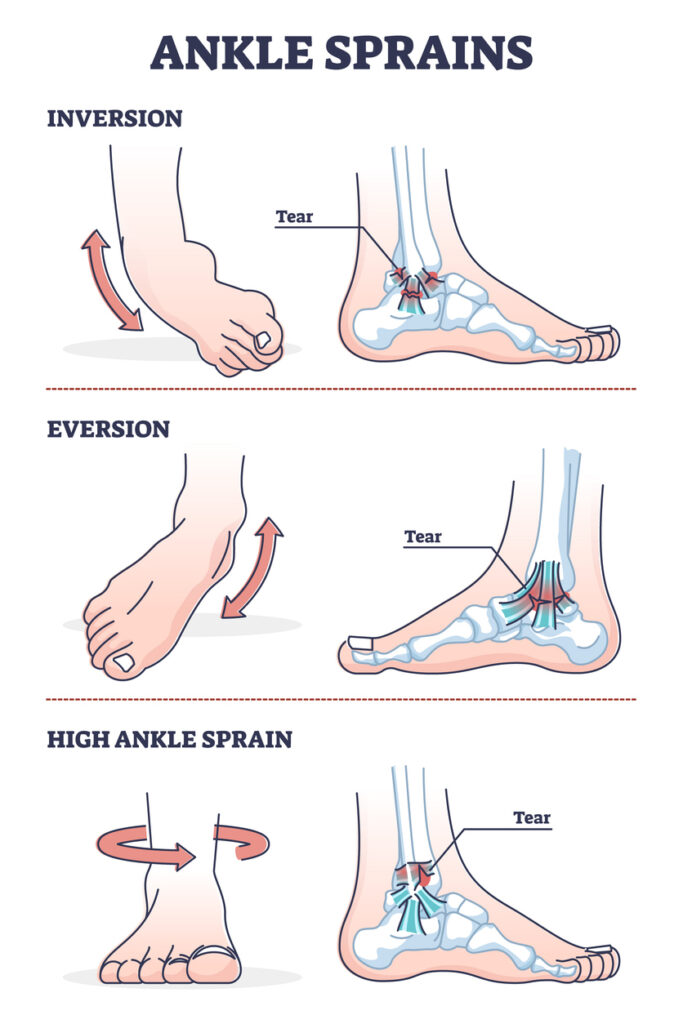
High ankle sprains, also known as syndesmosis sprains, occur when the ligaments connecting the tibia and fibula, the two long bones of the lower leg, are stretched or torn. These ligaments form the syndesmosis, a strong band of tissue that stabilizes the ankle and helps transfer weight from the leg to the foot. Unlike more common ankle sprains that affect the ligaments on the outside of the ankle, syndesmosis injuries compromise the stability of the lower leg itself, often making walking, running, and weight-bearing movements particularly painful.
High ankle sprains are frequently seen in athletes who participate in sports involving cutting, pivoting, or sudden changes in direction, such as football, basketball, and pickleball, but they can also result from falls, car accidents, or awkward twisting injuries. With an accurate diagnosis and a treatment plan tailored to the severity of the injury, most patients can regain strength, restore stability, and return to their normal activities safely.
What Causes High Ankle Sprains
High ankle sprains typically result from movements that force the ankle beyond its normal range of motion, placing excessive stress on the ligaments that stabilize the lower leg. Common causes include:
Sports-Related Movements
- Quick pivots, sudden stops, and cutting maneuvers
- Rapid changes in direction that place rotational stress on the lower leg
Direct Trauma
- Falls, tackles, collisions, or awkward twists
- Can push the ankle into abnormal positions, straining the syndesmosis
Risk Factors
- Previous ankle injuries or ongoing instability
- Improper footwear or uneven surfaces
- Biomechanical issues such as flat feet, overpronation, or abnormal gait patterns
Symptoms of High Ankle Sprains
High ankle sprains often present differently than lateral ankle sprains. Recognizing symptoms early can help patients seek timely evaluation and treatment. Common signs include:
- Pain Above the Ankle: Discomfort is typically felt slightly higher than the ankle joint, along the lower leg rather than directly at the ankle. This pain often becomes more noticeable during walking, climbing stairs, or any weight-bearing activity that places stress on the lower leg.
- Swelling and Bruising: Swelling commonly develops around the front and sides of the ankle and may extend upward toward the shin as inflammation increases. Bruising can appear gradually over time and may deepen in color as the injury progresses.
- Difficulty Walking or Bearing Weight: Many patients experience pain when walking, pushing off the foot, or standing for extended periods. The ankle may feel unstable or weak, making normal movement feel challenging or unreliable.
- Pain With Rotation or Stretching: Movements that rotate the foot outward or pull it upward, such as turning, pivoting, or changing direction quickly, often intensify discomfort. These motions place added strain on the injured ligaments.
- Tenderness to Touch: The area between the tibia and fibula near the syndesmosis is often sensitive when pressed. This localized tenderness can be an important indicator of a high ankle sprain during a physical exam.
How High Ankle Sprains Are Diagnosed
Accurate diagnosis is essential for guiding treatment and supporting recovery. Diagnosis often includes:
Medical History & Physical Exam
- Review how the injury occurred, such as during sports, a fall, or a twisting motion
- Assessment of symptoms, such as swelling, bruising, tenderness, and ankle stability
- Special tests such as squeeze test or external rotation test
Imaging
- X-rays (XR) to check for fractures or alignment changes
- Magnetic Resonance Imaging (MRI) for ligament damage
- Ultrasound (US) for real-time soft tissue evaluation
Early and precise diagnosis allows for a tailored treatment plan and helps reduce the risk of long-term ankle instability.
Treatment Options for High Ankle Sprains
Treatment for high ankle sprains depends on the severity of the injury, the patient’s activity level, and whether the syndesmosis ligaments are partially or completely torn. Common approaches include:
- Conservative Management: Mild to moderate sprains are often treated without surgery, using rest, activity modification, and targeted physical therapy to rebuild strength, flexibility, and stability. Ice and anti-inflammatory medications can help reduce pain and swelling.
- Surgical Repair: Severe sprains or complete tears may require surgery to stabilize the syndesmosis. Screws or suture devices are typically used to hold the tibia and fibula in proper alignment while healing.
- Physical Therapy and Rehabilitation: Rehabilitation, often guided by physical therapy, focuses on restoring ankle range of motion, rebuilding strength in the lower leg and foot muscles, and improving balance and stability to help prevent future injury.
- Shockwave Therapy: Shockwave therapy delivers focused energy waves to injured ligaments, promoting blood flow, tissue repair, and pain relief. It can be used with conservative care to support faster recovery.
- Supportive Devices: Braces, walking boots, or crutches protect the ankle during the early stages of healing and allow weight-bearing activities to be reintroduced gradually.

Prevention Strategies for High Ankle Sprains
Preventing high ankle sprains is especially important for athletes and active individuals. While not all injuries can be avoided, taking proactive steps can reduce the risk and protect the syndesmosis ligaments. Key strategies include:
- Strength and Conditioning: Regular exercises that target the lower leg, calf, and ankle stabilizing muscles help support the tibia and fibula during activity, reducing stress on the syndesmosis.
- Balance and Proprioception Training: Activities like single-leg stands, balance boards, or agility drills improve joint awareness and coordination, making the ankle more resilient to sudden twists or directional changes.
- Proper Footwear: Wearing shoes that provide adequate support, cushioning, and traction for your specific sport or activity helps prevent abnormal ankle movements that can strain ligaments.
- Safe Playing Surfaces: Whenever possible, avoid uneven, slippery, or unstable surfaces, which can increase the likelihood of twisting the ankle and injuring the syndesmosis.
- Taping or Bracing: For athletes with a history of high ankle sprains, supportive braces or athletic tape can provide extra stability during high-risk activities, reducing the chance of reinjury.
Recovery and Return to Activity
High ankle sprains typically take longer to heal than traditional ankle sprains because the syndesmosis ligaments bear significant stress during walking, running, and pivoting. Early recovery focuses on protecting the ankle, controlling swelling, and maintaining proper alignment. As healing progresses, physical therapy and guided rehabilitation become essential. Patients work to restore full range of motion, rebuild strength, improve balance, and reinforce safe movement patterns. Higher-impact activities, including running, jumping, and sports-specific drills, are gradually reintroduced under professional supervision. Following a structured rehabilitation plan is critical for preventing reinjury and regaining long-term ankle stability, mobility, and function.
Contact Us
If you think you may have a high ankle (syndesmosis) sprain or have been dealing with ongoing ankle pain, our team at Peter Howard, M.D. is ready to help. We take the time to understand your symptoms and provide a care plan tailored to your needs, so you can heal safely and regain full ankle function. Whether through conservative treatments, supportive devices, shockwave therapy, or surgery, we work with you every step of the way to restore strength, stability, and confidence in your movement. Reach out today to schedule an appointment and start your journey toward a stronger, healthier ankle.