
Shoulder pain is common for athletes and active adults, especially those who perform frequent overhead movements like throwing, swimming, weightlifting, or racquet sports. One of the most common causes of ongoing shoulder pain is a rotator cuff tear.
The rotator cuff is a group of muscles and tendons that stabilize the shoulder while guiding arm movement. Because the shoulder joint relies heavily on soft tissues to control movement, damage to these structures can quickly lead to persistent shoulder pain, weakness, and difficulty performing everyday activities.
Understanding the symptoms early can help prevent the injury from worsening and allow for faster recovery.
Quick Answer: What Does a Rotator Cuff Tear Feel Like?
A rotator cuff tear often causes a deep, aching pain in the shoulder that becomes worse with overhead movement or lifting.
Many people notice symptoms such as:
- Persistent shoulder pain during activity
- Weakness when lifting or rotating the arm
- Pain when reaching overhead
- Difficulty throwing or pressing weights
- Shoulder pain at night, especially when lying on the affected side
What Is the Rotator Cuff and Why Is It Important?
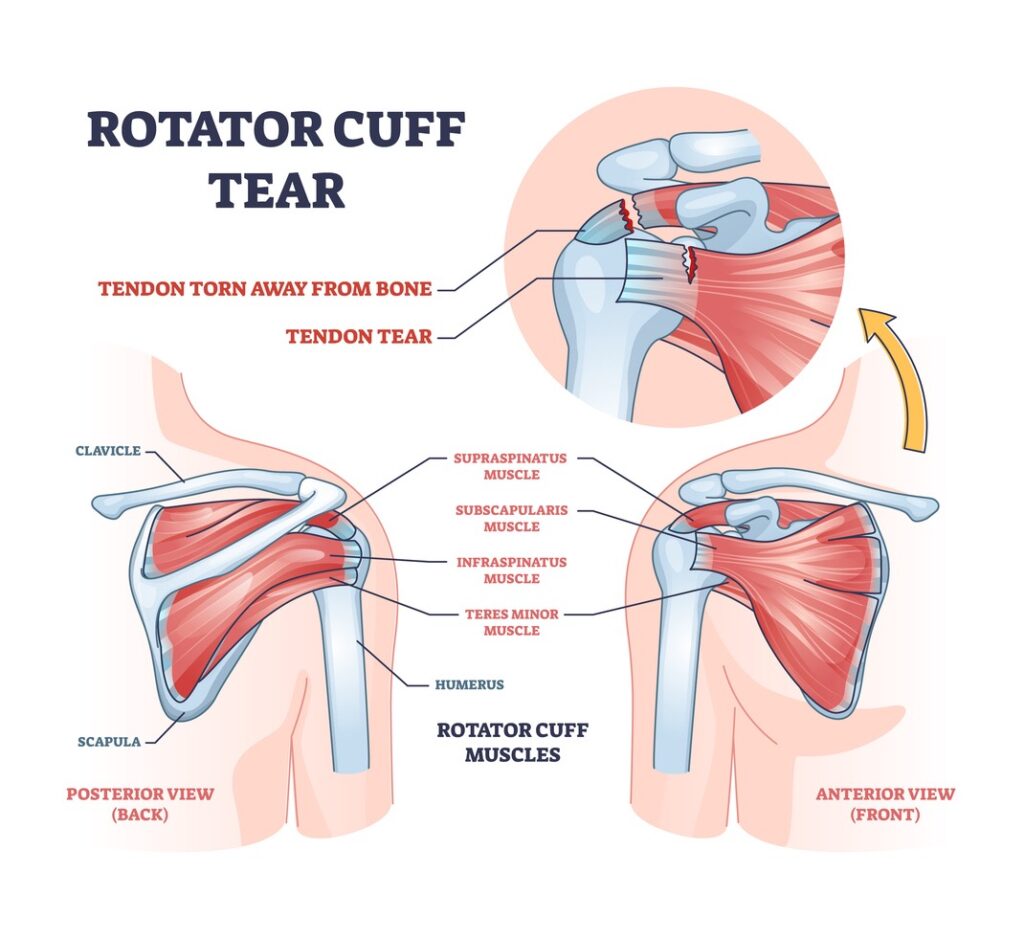
The rotator cuff consists of four muscles and their tendons: the supraspinatus, infraspinatus, teres minor, and subscapularis. Together, these muscles stabilize the shoulder joint while allowing the arm to move in multiple directions.
The shoulder is designed for a large range of motion, which is why athletes can throw, serve, swim, and lift overhead. However, this mobility also places significant stress on the tendons that support the joint.
A rotator cuff tear occurs when one or more of these tendons becomes partially or completely torn, often due to repetitive stress, degeneration over time, or a sudden injury. This can lead to abnormal movement patterns, inflammation, weakness, and reduced athletic performance.
What Are the Most Common Symptoms of a Rotator Cuff Tear?
Rotator cuff injuries may develop gradually or occur suddenly after lifting, repetitive overhead activity, or a fall.
Common symptoms include:
- Persistent Shoulder Pain: Many people feel a deep ache in the shoulder that worsens with activities like lifting, reaching, or throwing.
- Weakness in the Arm or Shoulder: Simple tasks like lifting groceries, reaching overhead, or performing shoulder exercises may feel noticeably weaker.
- Pain When Lowering the Arm: Some people experience sharp discomfort when lowering the arm from an overhead position or placing objects down.
- Night Pain or Difficulty Sleeping: Rotator cuff injuries frequently cause pain when lying on the affected shoulder, which can make sleeping difficult.
- Clicking, Catching, or Grinding Sensations: Some patients notice popping, clicking, or grinding sensations when moving the shoulder.
If these symptoms persist for more than a few weeks, a medical evaluation may be necessary.

Why Are Athletes More Likely to Tear Their Rotator Cuff?
Rotator cuff injuries are especially common in athletes because of the repetitive forces placed on the shoulder joint. Overhead movements generate significant stress across the tendons, particularly when performed at high speeds or under heavy load. Several factors increase the risk of injury:
- Repetitive Overhead Motion: Sports such as baseball, volleyball, swimming, tennis, and CrossFit involve repeated overhead actions that strain the rotator cuff.
- Muscle Imbalances: Strong chest and shoulder muscles combined with weaker scapular stabilizers can alter shoulder mechanics and overload the rotator cuff.
- Poor Shoulder Mobility or Stability: Limited mobility or weak rotator cuff muscles may cause athletes to compensate during overhead movements.
- Sudden Training Changes: Increasing training intensity, volume, or weight too quickly can overload the shoulder tendons.
- Previous Shoulder Injuries: Prior strains, impingement, or labral injuries can weaken the rotator cuff and increase the likelihood of a tear.
How Are Rotator Cuff Tears Treated Without Surgery?
Many rotator cuff injuries can be managed without surgery, especially when diagnosed early. Conservative treatment focuses on reducing inflammation, restoring shoulder mechanics, and strengthening the surrounding muscles.
- Physical Therapy: Targeted physical therapy improves rotator cuff strength, scapular stability, and shoulder mobility, which helps restore proper joint mechanics.
- Corticosteroid Injections: In some cases, a corticosteroid injection may be used to reduce inflammation and relieve shoulder pain, allowing patients to participate more effectively in physical therapy.
- Activity Modification: Reducing overhead training volume and temporarily avoiding aggravating movements can allow the tendon to recover.
- Anti-Inflammatory Treatment: Medication and other therapies can help control inflammation and reduce pain during recovery.
- Shockwave Therapy: Shockwave therapy uses focused acoustic waves to stimulate healing in damaged soft tissues. This treatment can improve circulation, reduce pain,
When Is Surgery Needed for a Rotator Cuff Tear?
Many rotator cuff injuries can be managed without surgery, especially when diagnosed early and treated with targeted therapies.
Surgery may be recommended if:
- The tear is large.
- The injury occurred from trauma.
- Pain and weakness persist after months of non-surgical treatment.
- Shoulder function continues to decline.
- A previous shoulder procedure failed.
Revision surgery can address these cases, repairing or reinforcing the tendon to improve stability and reduce ongoing discomfort.
Rotator cuff repair is often performed arthroscopically using small incisions and specialized instruments to reattach the tendon to the bone. This minimally invasive approach preserves surrounding tissues while restoring shoulder mechanics.
Recovery generally involves wearing a sling for several weeks and following a structured rehabilitation program to restore strength, range of motion, and shoulder stability. Most patients regain significant function within three to six months, while a full return to higher-level activities or sports may take six to twelve months, depending on the tear severity and individual progress. Early evaluation and careful post-operative care are especially important for those undergoing revision procedures to maximize outcomes and prevent further injury.
Shoulder Injury Care at Peter Howard, M.D.
If you are experiencing persistent shoulder pain or suspect a rotator cuff injury, our team at Peter Howard, M.D. is here to help. We provide thorough evaluations for athletes and individuals to identify the underlying cause of shoulder pain and develop a treatment plan tailored to your goals. Depending on the severity of the injury, treatment may include physical therapy, activity modification, or advanced arthroscopic procedures to repair damaged tendons. Our goal is to relieve pain, restore shoulder strength and stability, and help you return to sports and training safely. If shoulder pain is limiting your performance or daily activities, schedule an appointment today to take the first step toward recovery and long-term shoulder health.