The knee is one of the most frequently used and complex joints in the body, relying on bones, ligaments, tendons, and cartilage to provide both stability and smooth movement. Among these structures, the meniscus plays a critical role in absorbing shock, distributing body weight, and protecting the knee from excessive wear and tear.
Meniscus injuries are common, especially among athletes, active adults, and older individuals with age-related knee degeneration. Understanding the causes, symptoms, and treatment options—including repair and transplantation—can help you make informed decisions about your knee health.
What is the Meniscus?
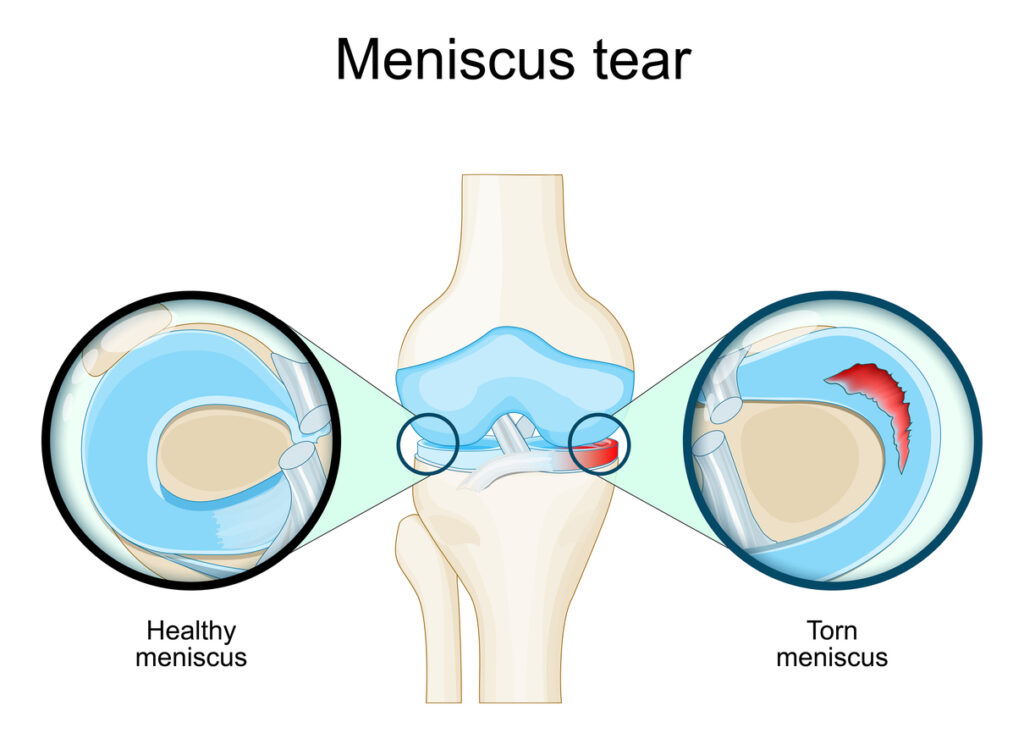
The meniscus is a C-shaped piece of cartilage located between the thigh bone (femur) and shin bone (tibia) in each knee. Each knee has two menisci:
- Medial Meniscus: Located on the inside of the knee
- Lateral Meniscus: Located on the outside of the knee
The menisci act as natural shock absorbers, reduce friction between bones, enhance joint stability, and distribute body weight evenly across the knee. Because only the outer third of the meniscus (known as the “red zone”) has a reliable blood supply, tears in this area have a better chance of healing on their own or being successfully repaired. Tears in the inner “white zone,” which lacks blood flow, often require surgical intervention.
Causes of Meniscus Tears
Meniscus tears can occur in both younger, active individuals and older adults with degenerative knee changes. Common causes include:
- Traumatic Injuries: Sudden twisting, pivoting, or change in direction—especially with the foot planted—can cause a tear. These injuries are frequent in sports like football, basketball, and skiing and are sometimes accompanied by ACL tears.
- Degenerative Changes: As we age, cartilage weakens and becomes less elastic. Over time, normal use can lead to small, frayed tears that gradually worsen, particularly in adults over 40.
- Direct Impact or Trauma: A hard blow to the knee—such as from a fall, tackle, or car accident—can damage the meniscus.
- Repetitive Stress: Jobs or activities that involve frequent squatting, kneeling, or heavy lifting can gradually weaken the meniscus, making it more prone to injury.
- Previous Knee Injuries: A history of prior knee injuries, including ligament tears or surgeries, can increase the likelihood of meniscus damage due to altered joint mechanics and weakened cartilage.
Symptoms of a Meniscus Tear
The symptoms of a meniscus tear can range from mild discomfort to significant pain and instability, depending on the severity and location of the tear. Common signs include:
- Pain: Usually localized to the inside or outside of the knee.
- Swelling: Often develops within hours of injury or over several days.
- Stiffness or Limited Motion: Difficulty fully bending or straightening the knee.
- Catching or Locking: A torn meniscus can sometimes get caught in the joint, causing it to “lock” or “click.”
- Instability or Giving Way: The knee may feel weak or unstable during movement.
Diagnosing Meniscus Injuries
Accurate diagnosis combines a physical examination, imaging, and a review of your medical history.
During the exam, your orthopedic specialist may perform tests such as the McMurray, Thessaly, or Apley grind tests to assess the meniscus and overall knee stability.
While X-rays cannot show cartilage directly, they help identify associated bone changes or arthritis. Magnetic resonance imaging (MRI) remains the gold standard for diagnosing meniscus tears, allowing your doctor to see the size, shape, and exact location of the injury.
Prompt diagnosis is important to prevent further damage and to determine whether non-surgical or surgical treatment is appropriate.

Treatment Options for Meniscus Tears
Treatment depends on the size, location, and type of tear, as well as the patient’s age, activity level, and overall knee health. Options range from non-surgical approaches to surgical repair or, in some cases, meniscus transplantation.
- Rest, Ice, Compression, and Elevation (RICE): Initial care can reduce pain and swelling and support early healing.
- Physical Therapy: Strengthening surrounding muscles and improving knee stability can help the meniscus heal and prevent future injuries.
- Bracing or Activity Modification: Avoiding high-impact activities or movements that strain the knee allows the meniscus to recover effectively.
- Meniscus Repair or Partial Meniscectomy: If the tear occurs in the outer portion with good blood supply, it can often be sutured and repaired arthroscopically. When the damaged portion cannot be repaired, it may be trimmed away to preserve as much healthy meniscus as possible.
- Meniscus Transplant: For patients with prior meniscectomy or severe cartilage loss, transplantation using donor cartilage can restore knee stability, reduce pain, and help protect against degenerative changes.
Risks of Untreated Meniscus Tears
If left untreated, meniscus tears can lead to chronic pain, swelling, and instability. Over time, abnormal movement and uneven weight distribution can accelerate cartilage wear, increasing the risk of osteoarthritis. Patients may also experience difficulty performing daily activities, reduced athletic performance, or additional injuries to ligaments and cartilage due to altered knee mechanics. Early evaluation and appropriate intervention are key to maintaining knee function and long-term joint health.
Preventing Meniscus Injuries
While not all meniscus tears can be avoided, certain strategies can reduce the risk and support long-term knee health:
- Strengthen Supporting Muscles: Strong quadriceps, hamstrings, and hip muscles help stabilize the knee during twisting and pivoting movements.
- Practice Proper Techniques: Using correct landing, cutting, and pivoting techniques during sports can protect the meniscus from excessive strain.
- Maintain a Healthy Weight: Reducing excess stress on the knee joint helps preserve cartilage and prevent degenerative changes.
- Use Appropriate Gear: Supportive footwear and, in some cases, knee braces provide additional protection during high-risk activities.
- Address Injuries Promptly: Proper rehabilitation of prior knee injuries reduces the risk of recurrent meniscus tears and other complications.

When to Seek Professional Care
If you experience knee pain, swelling, catching, locking, or a feeling of instability—especially after trauma, sports activity, or a previous knee injury—it is important to seek evaluation from an orthopedic specialist promptly. Early assessment allows for an accurate diagnosis, appropriate treatment planning, and intervention to prevent further damage. Timely care can improve recovery, reduce chronic pain, and lower the risk of long-term degenerative changes.
Contact Us
The meniscus is essential for knee stability, shock absorption, and smooth joint movement. Whether you are dealing with a small tear, a complex injury, or a previously removed meniscus, understanding your treatment options—repair, partial removal, or transplantation—can make a significant difference in long-term knee function. At Peter Howard, M.D., patients benefit from advanced diagnostic techniques, personalized surgical care, and structured rehabilitation programs designed to restore stability, reduce pain, and support a safe return to activity. If you are experiencing knee pain, swelling, or instability, schedule a consultation today to take proactive steps toward protecting your knees and maintaining an active, healthy lifestyle.