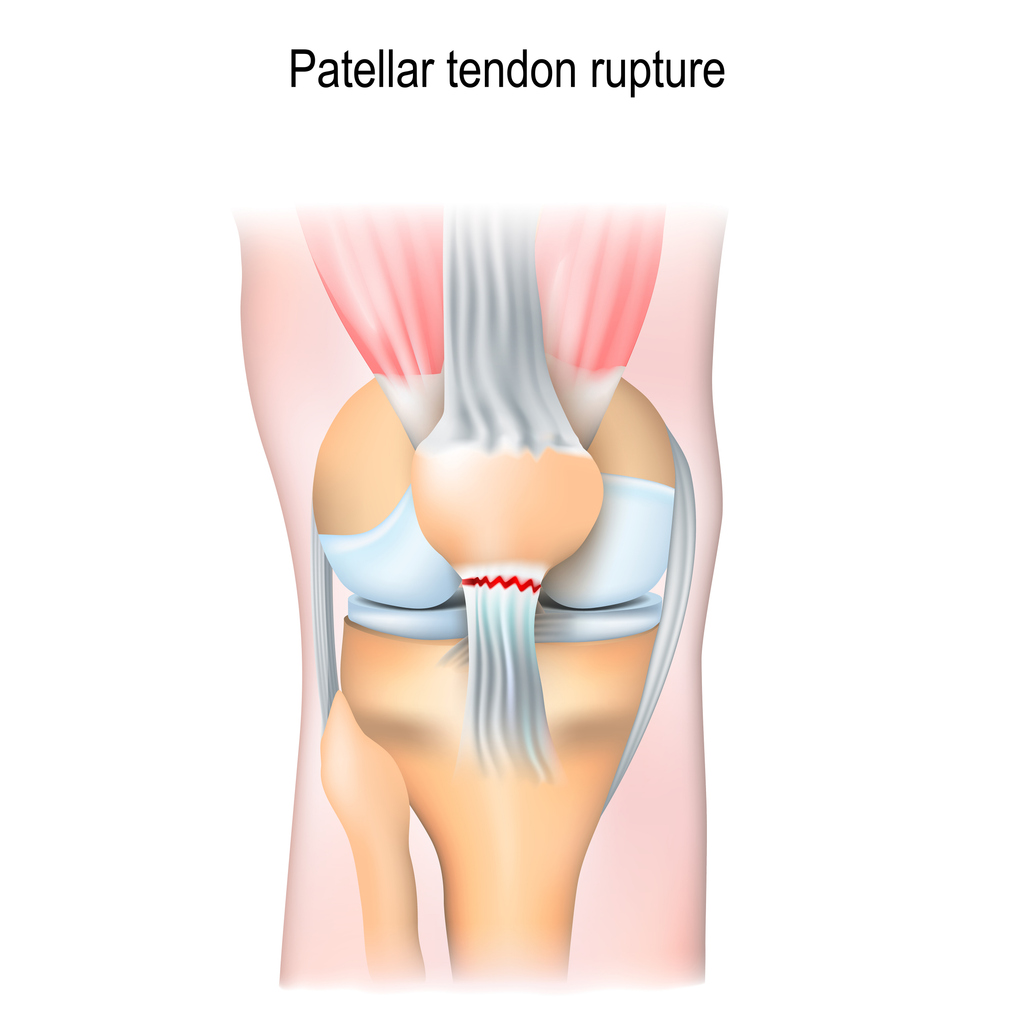
A patellar tendon rupture is a significant injury that can make simple movements like walking, climbing stairs, or standing feel impossible. It occurs when the tendon connecting your kneecap (patella) to your shinbone (tibia) tears, disrupting your knee’s “extension mechanism.”
Whether your injury happened suddenly during a sport or developed over time due to wear and tear, understanding the recovery process is the first step toward getting back on your feet.
What Is the Patellar Tendon and Why Is It Important?
The patellar tendon is a thick, strong band of connective tissue that connects the kneecap (patella) to the shinbone (tibia). It works together with the quadriceps muscles and quadriceps tendon to form the knee’s extensor mechanism, which enables the leg to straighten and bear weight. Every time you stand from a chair, climb stairs, jump, or kick a ball, this tendon transfers force from the thigh muscles to the lower leg, allowing controlled movement and stability. Because it plays such a central role in mobility, any damage to the patellar tendon can significantly affect balance, strength, and everyday function. When the tendon ruptures, this critical connection between muscle and bone is disrupted, preventing full knee extension and often causing weakness, instability, and difficulty performing routine activities.
What Causes a Patellar Tendon Rupture?
Patellar tendon ruptures typically occur when the tendon is exposed to more force than it can handle. This can happen suddenly or as the result of gradual weakening over time. Common causes include:
- Sudden Forceful Movements: Activities that involve jumping, sprinting, or quickly changing direction place high stress on the knee. Landing awkwardly or pushing off forcefully can overload the tendon, leading to a tear.
- Direct Trauma: A fall onto the knee, a collision during sports, or a direct blow can damage the tendon, especially if the knee is bent at the time of impact.
- Chronic Tendon Degeneration: Long-standing inflammation, often referred to as patellar tendonitis or jumper’s knee, can weaken the tendon fibers. Over time, this makes the tendon more vulnerable to rupture, even during routine activities.
- Repetitive Overuse: Repeated stress from running, jumping, squatting, or kneeling can gradually break down tendon tissue, reducing its ability to withstand force.
- Medical Conditions and Medications: Certain health conditions and medications, including long-term corticosteroid use, can weaken connective tissue and increase the risk of rupture.
Symptoms of a Patellar Tendon Rupture
A patellar tendon rupture often occurs suddenly and is usually accompanied by immediate and noticeable symptoms. Recognizing these signs early can help patients seek prompt evaluation and treatment. Common symptoms include:
- Sudden Knee Pain: A sharp or intense pain at the front of the knee often occurs at the moment of injury. Some patients describe hearing or feeling a “pop” as the tendon tears, and the pain can make it difficult to bear weight or move the leg.
- Swelling and Bruising: Rapid swelling around the knee joint is common and may develop within hours of the injury. Bruising may also appear, sometimes extending down toward the shin or up toward the thigh.
- Difficulty Straightening the Leg: Many patients find they are unable to fully extend the knee or lift the leg while keeping it straight. Even minor movements, such as standing from a chair or stepping up, can become challenging or impossible.
- Instability or Buckling: The knee may feel weak or unstable, giving way unexpectedly when attempting to walk, climb stairs, or pivot. This can make routine activities unsafe and increase the risk of further injury.
- Changes in Kneecap (Patella) Position: In some cases, the kneecap may shift upward due to the tendon no longer holding it in place. This change can sometimes be visible and may make the front of the knee appear uneven or out of alignment.

Diagnosis and Modern Treatment Options
Treatment for a patellar tendon rupture depends on the severity of the injury and the patient’s activity level. At the office of Peter Howard, M.D., we use a combination of physical exams and imaging (MRI or Ultrasound) to determine if a tear is partial or complete.
Non-Surgical (For Partial Tears)
- Immobilization: Using a brace to keep the knee straight while the fibers knit back together.
- Physical Therapy: Plays a key role in recovery, helping to strengthen the quadriceps and surrounding muscles, improve flexibility, and restore safe movement patterns.
- Shockwave Therapy: A noninvasive treatment that stimulates blood flow, encourages tendon repair, and reduces pain.
Surgical (For Complete Tears)
- Most complete ruptures require surgical reattachment to restore the ability to walk and climb stairs.
What Recovery Looks Like
Recovery from a patellar tendon rupture takes time and patience, with early stages focused on protecting the knee, controlling swelling, and maintaining proper alignment. As healing progresses, physical therapy becomes a central part of rehabilitation, helping to restore range of motion, rebuild muscle strength, improve balance and stability, and reinforce proper movement patterns. Higher-impact activities are gradually reintroduced under professional supervision, allowing the tendon to safely adapt to increased stress. Following a structured rehabilitation plan is essential for preventing reinjury and achieving long-term knee stability, so patients can regain confidence in their mobility and return to daily activities or sports safely.
- Weeks 0–6: Protection and gentle range of motion.
- Months 3–6: Strengthening and returning to daily activities.
- Months 6+: Gradual return to high-impact sports.
When to Seek Care
If your knee pain is sudden, severe, or accompanied by swelling, weakness, or difficulty straightening your leg, it is important to seek evaluation promptly. Patellar tendon injuries can worsen if ignored, leading to prolonged recovery, chronic pain, and reduced mobility. Early assessment allows a healthcare provider to accurately diagnose the injury, determine its severity, and begin treatment quickly, improving the chances of a full and safe recovery. Timely care also helps prevent further damage to the tendon and surrounding structures, supporting a smoother return to daily activities, exercise, and sports.
Contact Us
If you believe you may have a patellar tendon injury or are experiencing ongoing knee pain, the team at Peter Howard, M.D. is here to help. We provide thorough evaluations and personalized care plans designed to support safe healing, restore strength, and protect long-term knee function. From conservative management and supportive devices to advanced treatments like shockwave therapy or surgical repair, we work with you to improve mobility, reduce discomfort, and build confidence in your movement. Contact us today to schedule an appointment and take the first step toward a stronger, more stable, and active future.