

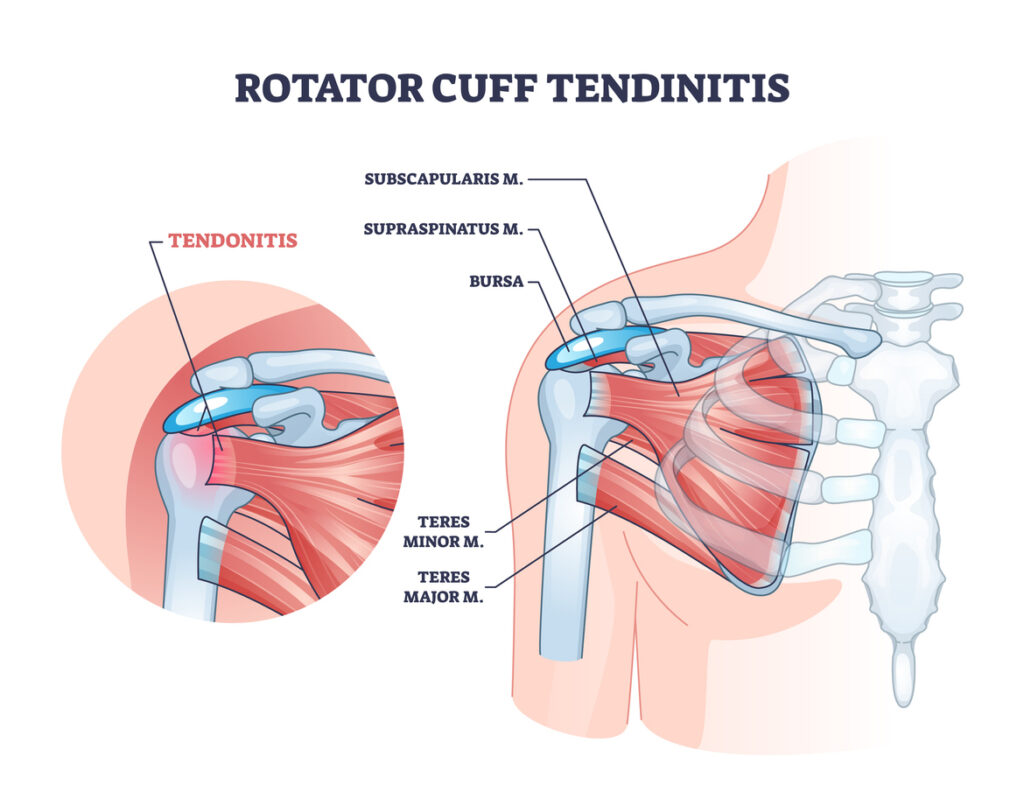
Rotator cuff tendonitis is a common shoulder condition that develops when the tendons surrounding the shoulder joint become irritated or overloaded. These tendons help lift and rotate the arm, which means they are activated during many daily activities, from reaching overhead to carrying groceries to working out. When the tendon experiences repeated strain, inflammation and pain can develop, often interfering with normal shoulder movement. Below is a clear, structured overview of what causes rotator cuff tendonitis, the symptoms you might notice, and how treatments, including shockwave therapy, can support healing and long-term shoulder function so that you can protect your shoulder health.
What Causes Rotator Cuff Tendonitis
Rotator cuff tendonitis occurs when one or more of the rotator cuff tendons experience repeated friction or overload. This can lead to irritation, microtears, and gradual weakening of the tendon over time. Some of the most common contributors include:
- Repetitive Overhead Motion: Activities such as lifting, throwing, swimming, or overhead work can strain the tendon. Over time, this repeated motion makes the tendon more vulnerable to irritation and injury.
- Poor Shoulder Mechanics: Weakness or imbalances in the shoulder blade and upper back can alter movement patterns. These dysfunctions cause the rotator cuff to work harder than it should, increasing stress on the tendon.
- Sudden Increases in Activity: Quickly ramping up exercise intensity or volume, especially with weightlifting or sports, can overload the tendon before it adapts. This rapid change often triggers early irritation.
- Postural Strain: Rounded shoulders or prolonged sitting can reduce the space in the shoulder joint. Over time, this compresses the rotator cuff and contributes to inflammation.
- Aging-Related Tendon Changes: Natural wear over time can make the tendon less flexible and more prone to irritation. These changes may combine with daily activities to trigger symptoms.

Symptoms of Rotator Cuff Tendonitis
Symptoms typically start gradually and can become more noticeable during activities that require lifting or reaching. Many people feel discomfort before they experience significant pain. Common signs include:
- Shoulder Pain: Aching or sharp pain along the front or side of the shoulder, especially during lifting. This discomfort often worsens with overhead motions or reaching behind the back.
- Nighttime Discomfort: Pain when lying on the affected shoulder. Sleep can become disrupted as inflammation increases pressure in the joint.
- Weakness With Lifting: Difficulty raising the arm or holding objects away from the body. The shoulder may feel unstable or easily fatigued during routine tasks.
- Limited Range of Motion: Stiffness or difficulty moving the arm through its full range. Everyday activities like grooming or dressing may become uncomfortable.
- Pain With Repetitive Use: Increased discomfort during activities like cleaning, exercise, or carrying items. Repeated motion can worsen inflammation and make symptoms more persistent.
How Rotator Cuff Tendonitis Is Diagnosed
Diagnosing rotator cuff tendonitis typically involves a hands-on shoulder evaluation to determine where the tendon is irritated and how your movement patterns may be contributing to the problem. The team at Peter Howard, M.D. assesses your shoulder strength, flexibility, and range of motion, and reviews your daily activities or exercises that may be placing stress on the tendon. Additional tests may be used to rule out related conditions that can mimic tendon pain. This thorough approach helps pinpoint the source of discomfort and guides a personalized treatment plan to ensure safe and effective recovery.
Treatment Options
Most people improve with a structured treatment plan designed to reduce strain on the shoulder, restore tendon strength, and improve overall shoulder mechanics. This often includes modifying repetitive or overhead activities, incorporating targeted stretching and strengthening, and working with physical therapy to improve posture, mobility, and muscle balance. Supportive devices such as shoulder straps or taping may also help reduce tension during daily movements. For cases that don’t improve with these measures, shockwave therapy offers a noninvasive option to stimulate healing within the tendon, improve tissue quality, and reduce discomfort, making it a valuable next step before considering more advanced interventions.
While shockwave therapy is highly effective for many patients with rotator cuff tendonitis, some individuals with significant tears or more complex injuries may eventually require surgical repair. In those situations, Dr. Howard uses advanced, next-generation tools designed to improve outcomes. Tetrous provides innovative support for precise and stable rotator cuff repairs, and the CONMED BioBrace implant combines synthetic and biologic materials to reinforce the tendon and promote stronger healing. These options are available when needed, but they are not part of standard tendonitis care—they simply offer additional resources for patients who require more advanced treatment.
Introducing Shockwave Therapy for Advanced Rotator Cuff Healing
Shockwave therapy is now available in Dr. Howard’s office as a focused, noninvasive option for patients dealing with chronic or stubborn rotator cuff tendonitis, as well as other tendon conditions such as tennis elbow, Achilles tendonitis, and hip tendonitis. Dr. Howard offers this treatment, providing an accessible way to address tendon-related shoulder pain.
This therapy delivers targeted acoustic waves directly to the irritated tendon, helping to promote healing, reduce inflammation, and improve tissue quality. Key benefits of shockwave therapy include:
- Improved Circulation: Stimulates blood flow to support natural tendon repair. Increased circulation brings essential nutrients that help the tissue recover more effectively.
- Tissue Remodeling: Breaks down thickened or damaged tendon fibers and encourages healthier tissue formation. Over time, this can improve tendon strength and shoulder function.
- Pain Reduction: Helps calm irritated nerve endings that contribute to chronic shoulder pain. Many patients experience gradual relief, making daily tasks more comfortable.
- Accelerated Healing Response: Encourages the tendon to repair and rebuild more efficiently. This can shorten recovery time and support better long-term outcomes.
- Noninvasive Relief: Offers an alternative to injections or surgical interventions with little to no downtime. Most patients return to normal activities shortly after each session.

When to Seek Care
If your shoulder pain lasts longer than a few weeks, interferes with lifting or reaching, or makes sleep difficult, it’s important to schedule an evaluation. Addressing rotator cuff tendonitis early can prevent the condition from becoming chronic, reduce the risk of further tendon irritation, and help restore your shoulder’s flexibility, strength, and comfort. Early treatment also supports long-term shoulder health and allows you to return to your regular activities more safely.
Contact Us
If you’re experiencing symptoms of rotator cuff tendonitis or want to learn whether shockwave therapy may be a good fit for you, our team at Peter Howard, M.D. is here to help. We provide personalized care to evaluate your shoulder, recommend the most effective treatment options, and guide you through each step of your recovery. Contact us today to schedule an appointment and take the first step toward better mobility, reduced pain, and stronger, healthier shoulders.